Welcome to the Active Sensemaking Community website!
We invite you to put on new lenses to see the world in new ways. Join us to learn and improve ways to help people better navigate together in the complex yet fascinating world of human systems.About this page (method definition): The definitions of active sensemaking, self‑signification, and sensor design on this page follow the framing described by Barrett W. Horne & Henrik Nielsen in QRCA Views (2020). Where we add community guidance (e.g., facilitation, governance, learning loops), we label those sections as practice notes.
activesensemaking.com is a community hub for sharing practice notes, examples, and learning about active sensemaking as a mixed‑method approach. For a peer‑audience introduction to the method—why it exists, how it works, and what makes it distinctive—see Horne & Nielsen’s QRCA Views article (2020), which this site references as its baseline definition.
Contributors: Stephen Bosacker, Barrett W. Horne, Ajay Reddy, Desiree Raymond.
Site-authored content: Content explicitly labeled as authored by ActiveSensemaking.com is licensed under the Creative Commons license shown in the site footer (unless a different license is stated).
Member-authored content: Community contributions (posts, emails, shared docs, workshop notes) remain the property of the author(s). Do not repost or republish without permission. When reusing ideas, cite the contributor and context.
Materials distributed through on-line conversations, voice or in-person conversations, email, or attached word processing or text documents will be considered INFORMAL communications. Contents of such documents will be considered the property of the writer. Out of respect for each other and expectation that value will be given for value, members will be expected to acknowledge sources for ideas that appear in informal documents.
Materials that are distributed in .pdf format will be considered FORMAL communications. They will be owned by the author and should be cited formally in any reuse by other members or by ActiveSensemaking.com itself.
Materials published by ActiveSensemaking.com, including books, journal articles, newsletter articles, and white papers, will be considered PUBLISHED materials. The authors will retain copyright for the published materials, and ActiveSensemaking.com will have license to extract from or reproduce them in any variation throughout the life of ActiveSensemaking.com.
All Associates and staff of the ActiveSensemaking.com are accountable to conform to this policy and to enforce it in all their interactions.
All human beings live and breathe, and are born and die within an intricate, interlocking, and multi-faceted web of human systems. Families, friends, enemies, tribes, formal and informal associations, nations, organizations of diverse kinds, suppliers of goods and services, customers and clients—the list goes on and on and the possible combinations are, quite literally, infinite. Each and all of these relationships have its own layers—networks within networks, systems within systems. Our human system on the earth is, in fact, a vast complex adaptive system. Then add to the mix the complexity that human beings bring through their individual and collective agency and identities. Each person plays their various roles as ‘wholes’ and ‘parts’ within that web of relationships and systems. Human systems can be understood as complex adaptive systems (CAS), and the environments they operate in are often described as VUCA (volatile, uncertain, complex, ambiguous). Active sensemaking emerged as a way to learn in those conditions when cause‑and‑effect is hard to determine—even in hindsight.
Many (perhaps most) human system problems and challenges are complex, especially in this generation when globalization and technology speed up and complexify local and regional dynamics. Organizations, researchers, governments, and individuals are recognizing that so many problems are much more complicated than previously recognized. This has led to new sciences, disciplines, and practices focused on complexity and how to help organizations and communities thrive in complexity.
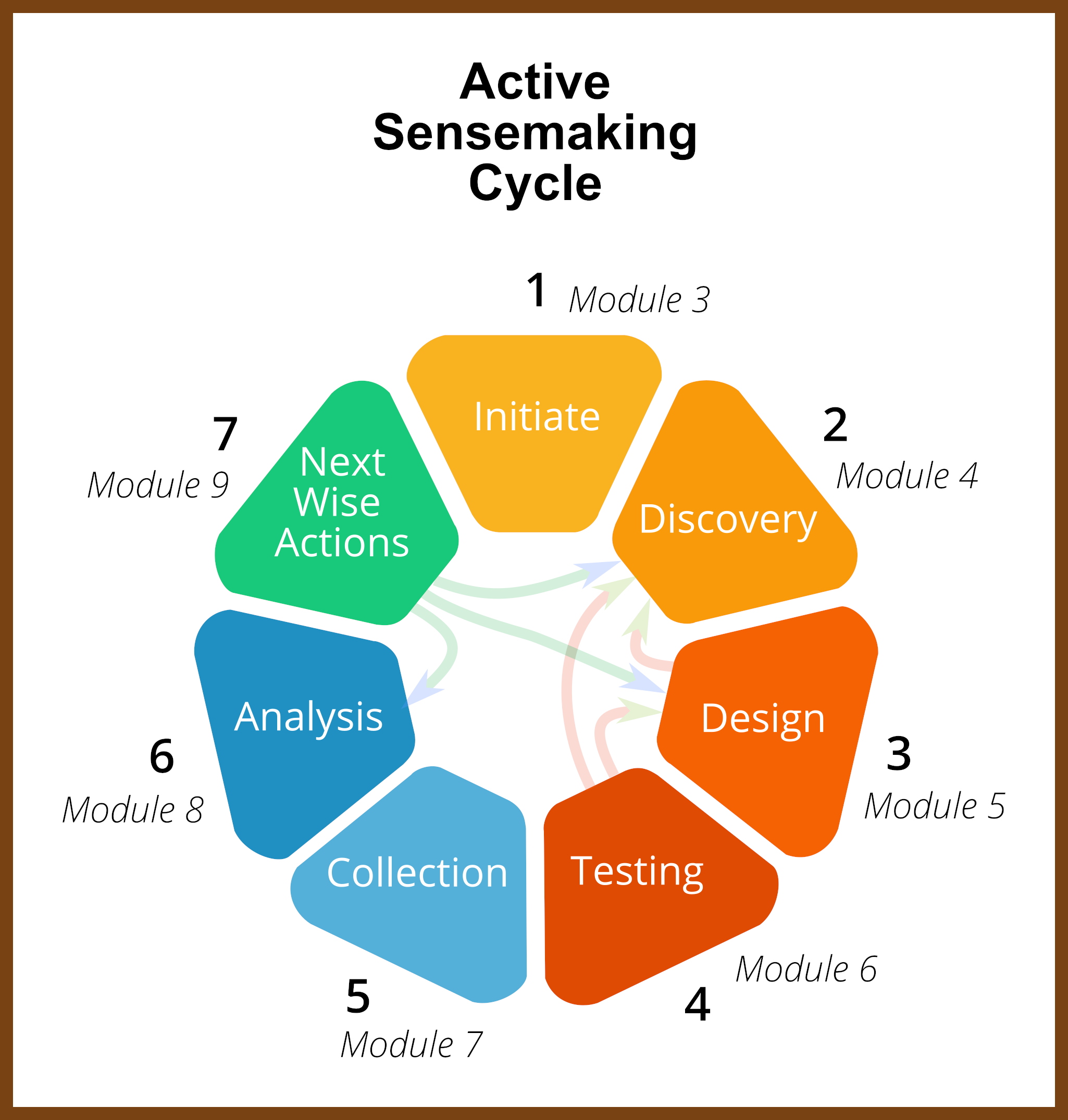
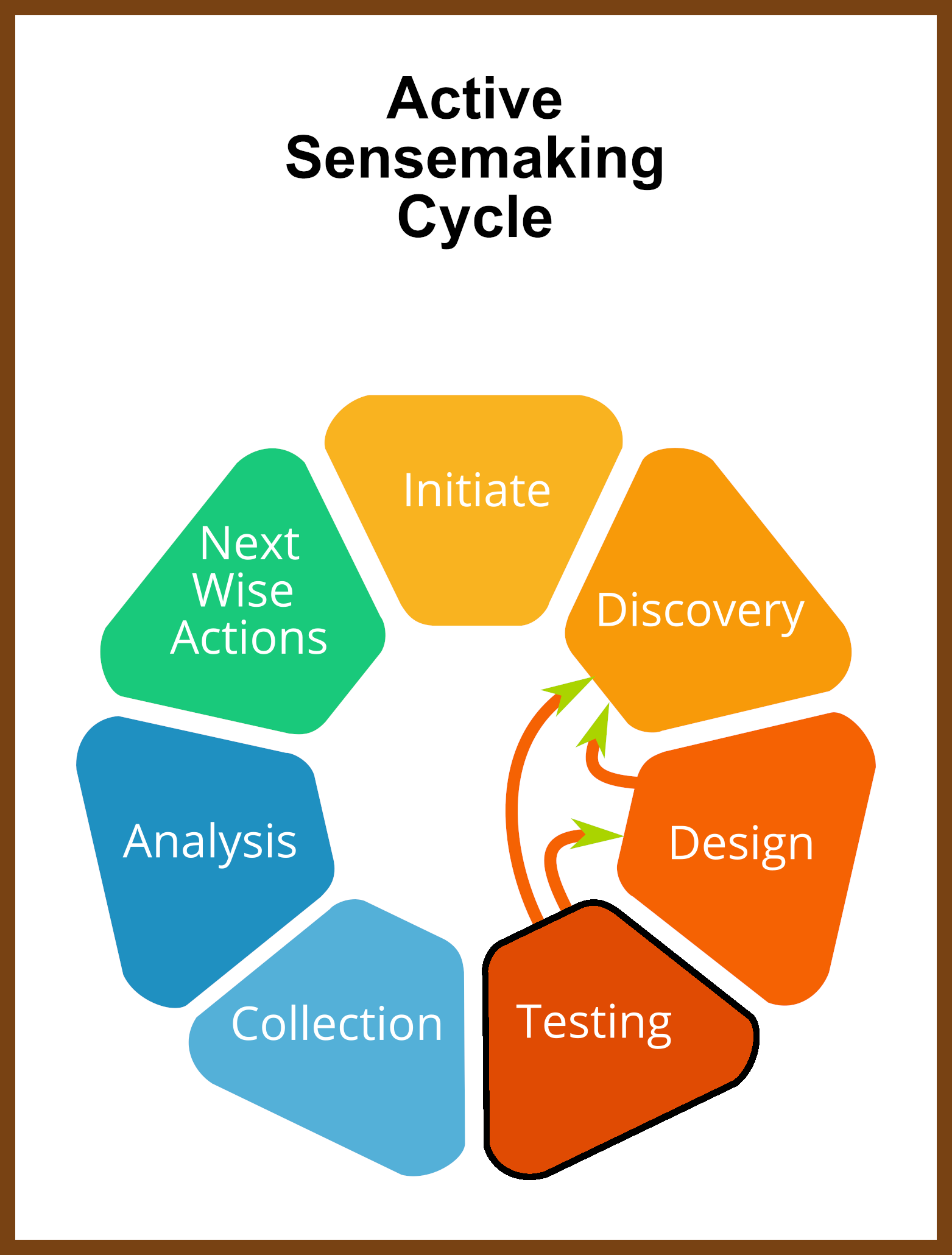
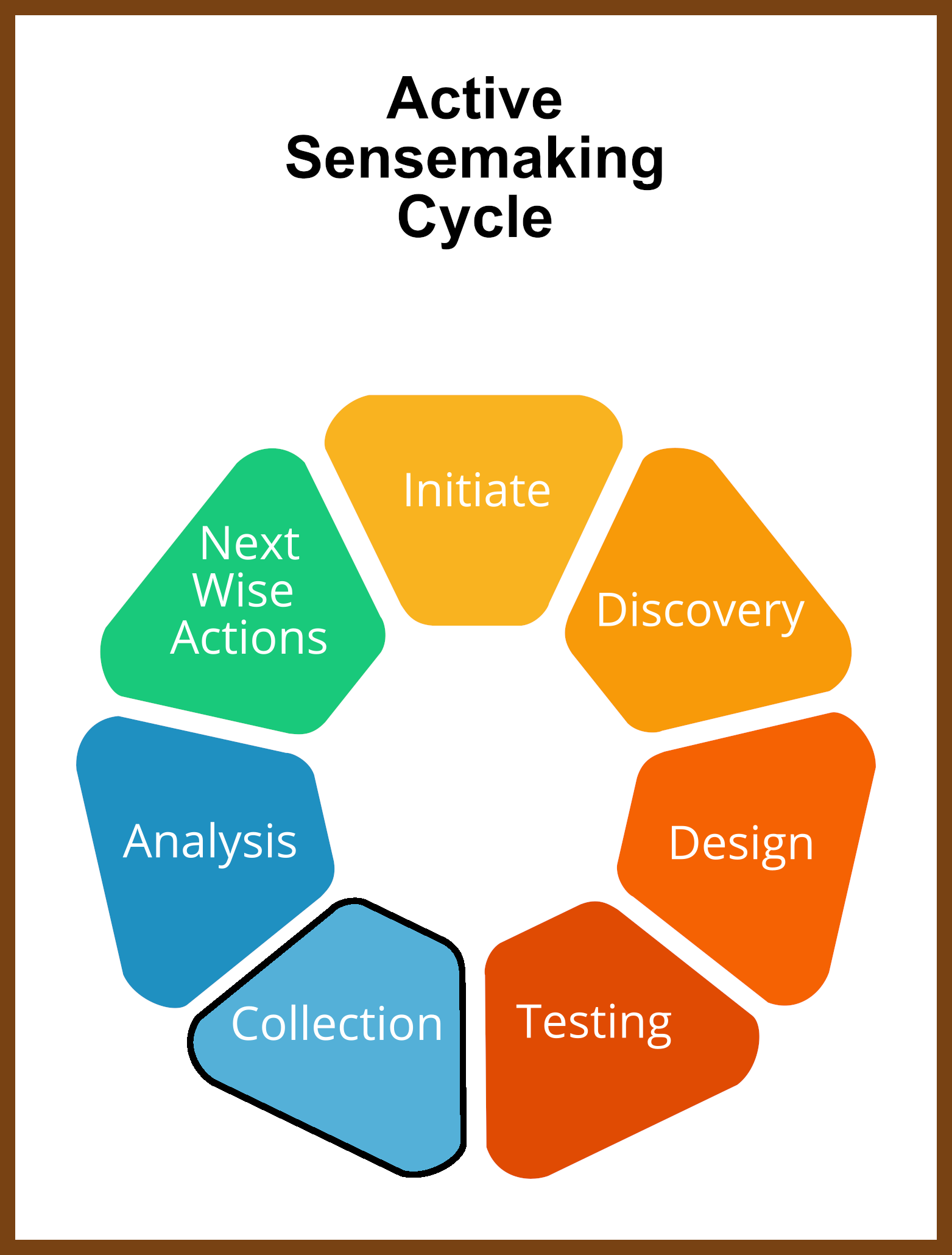
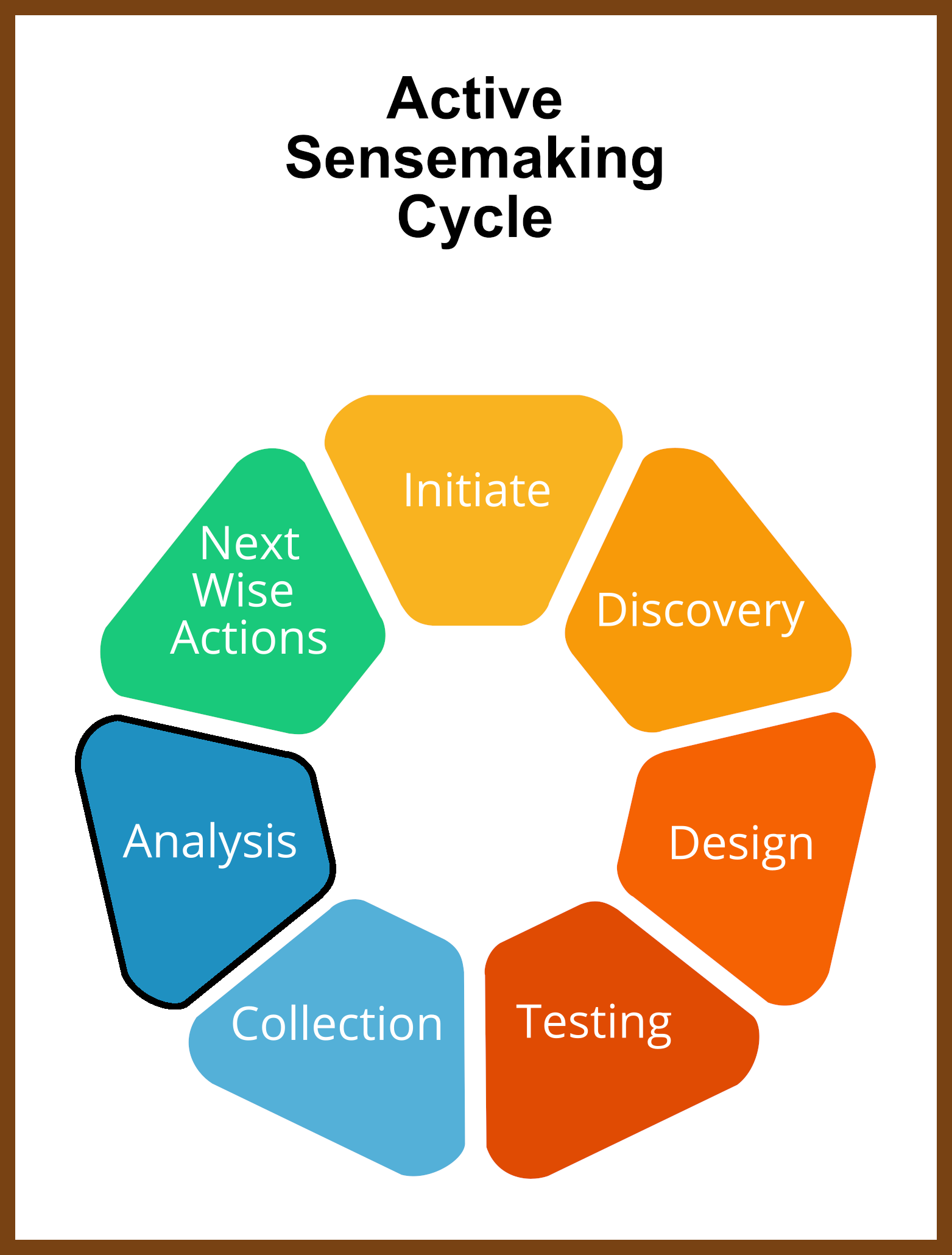
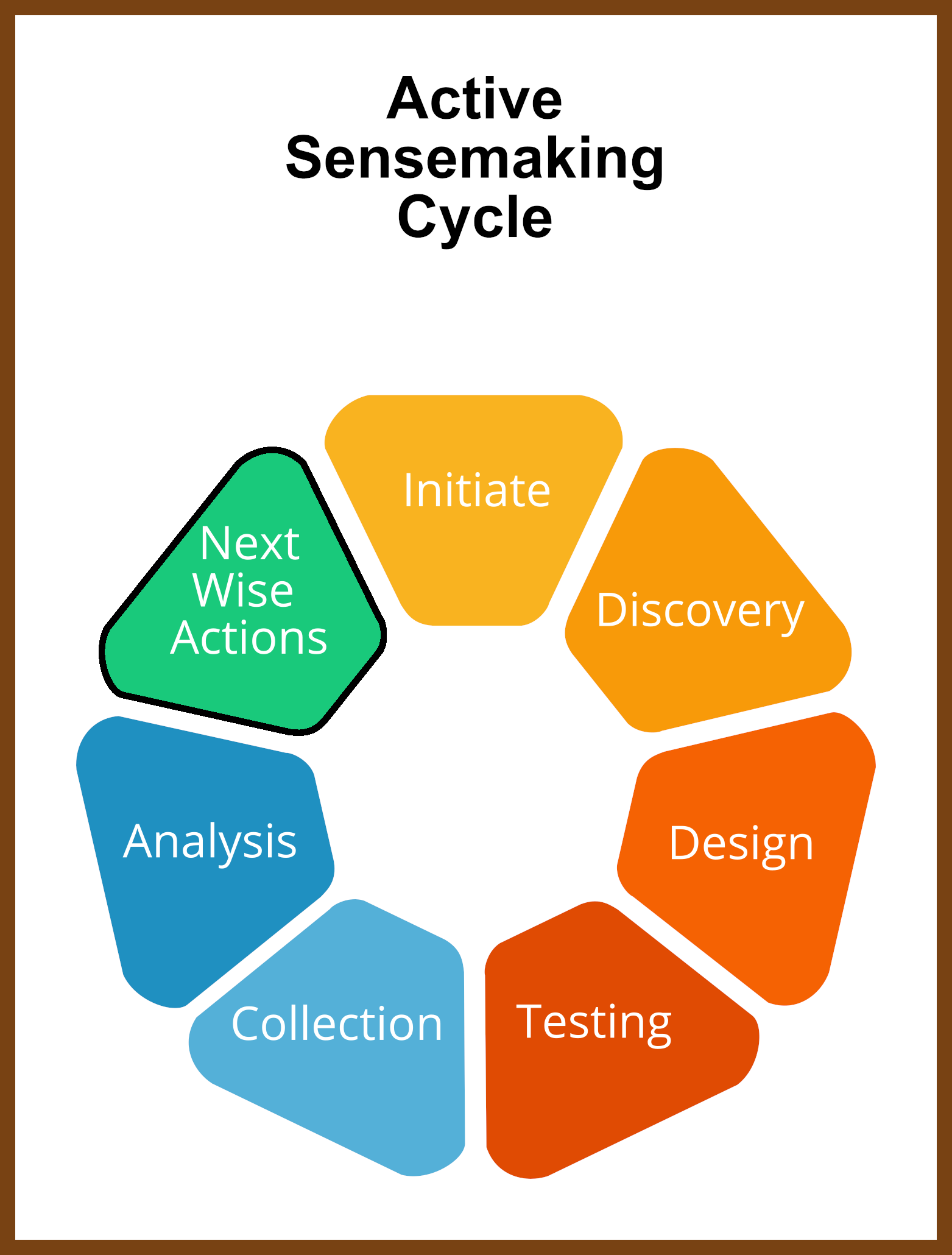
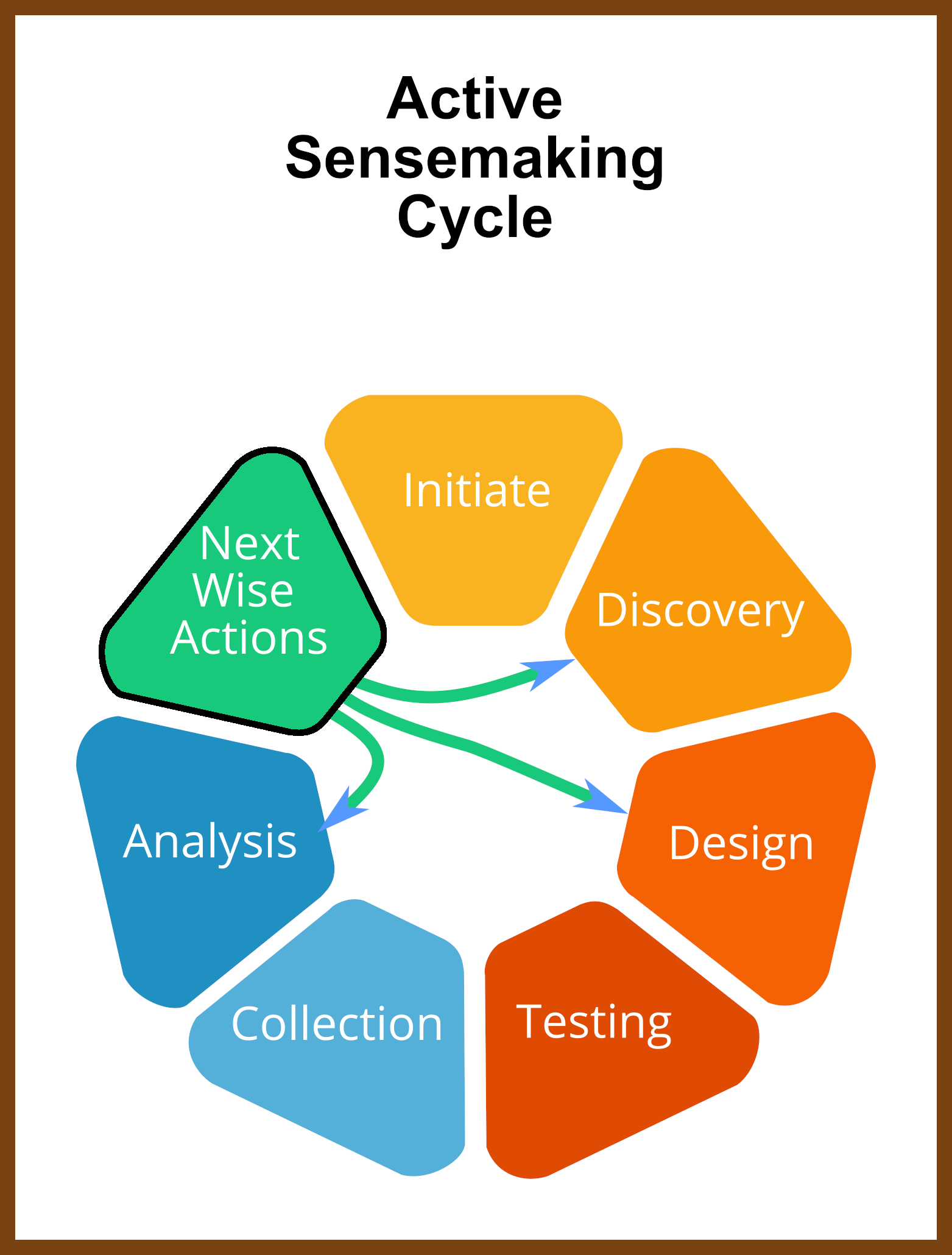
“Active Sensemaking” is one method and practice that has been developed and refined over recent years through practice in complex human systems.